Parkour vs Gymnastics: What’s the Difference and Which Is Better for Kids?
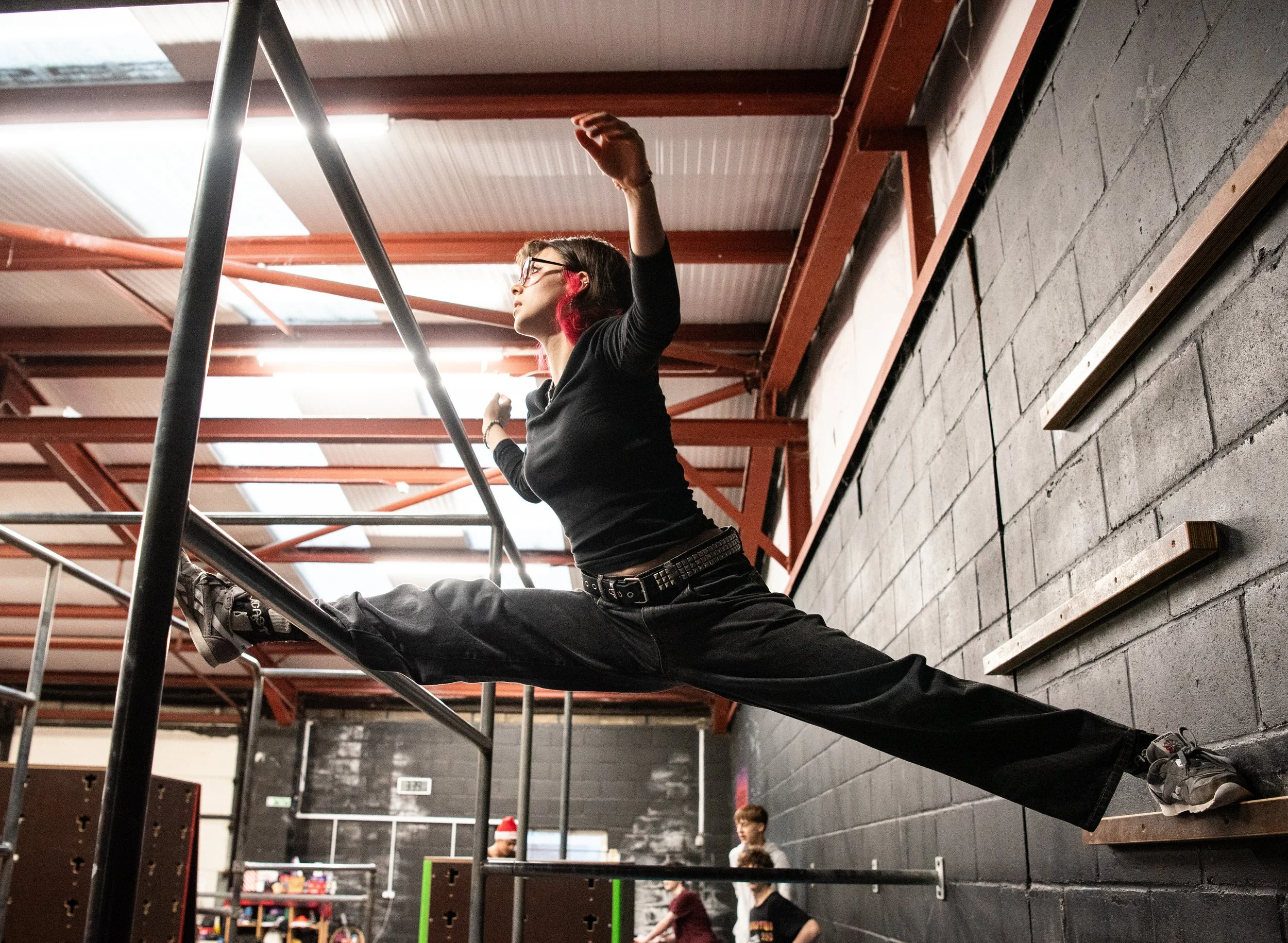
Flexibility isn’t just for gymnasts.
By Drew Ratcliff - Head Coach at Crawley Parkour CIC
When parents are looking for activities that help their children build strength, confidence, and coordination, two sports often come up: gymnastics and parkour. On the surface, they can appear quite similar. Both involve jumping, landing, balance, and impressive physical control.
However, once you look beyond those surface similarities, it becomes clear that parkour and gymnastics are very different disciplines with different philosophies, training approaches, and goals.
As someone who has spent many years coaching parkour, I’m often asked about the difference between the two. Both sports are fantastic in their own ways, but they suit different types of people and different ways of thinking about movement.
What Is Gymnastics?
Gymnastics is a highly structured sport that has been developed over many decades and is well known through international competitions such as the Olympics. Gymnasts train to perform specific movements and routines on apparatus such as the floor, bars, rings, vault, and beam. These routines are judged according to strict criteria that evaluate difficulty, precision, and execution.
Because of this structure, gymnastics places a strong emphasis on perfecting technique and performing movements to a very high standard. It’s an incredibly demanding sport that develops flexibility, strength, body control, and discipline. Athletes spend years refining their movements so that they can perform routines with precision and power.
For many children who enjoy working toward clear goals and structured achievements, gymnastics can be a brilliant activity.
What Is Parkour?
Parkour, on the other hand, developed from a very different background.
Its roots lie in French military obstacle training and the teachings of Georges Hébert, whose philosophy centred around the idea of “Être fort pour être utile” be strong to be useful. The aim was to develop practical strength, agility, and adaptability that could help someone navigate real environments and assist others when needed.
Rather than performing movements for judges or audiences, parkour originally focused on efficiency, capability, and resilience. Practitioners train to move through obstacles using running, jumping, climbing, balancing, and vaulting in ways that are efficient and adaptable.
While modern parkour has developed into many different styles, including more performance-based freerunning, the core philosophy remains centred on personal improvement rather than performance for others.
In simple terms, the goal isn’t to perform the best movement anyone has ever seen. The goal is to perform your best movement.
The Philosophical Difference
This difference in philosophy is one of the biggest distinctions between the two disciplines.
Gymnastics is built around performing routines according to strict technical standards, often within a competitive framework. Success is measured by how well an athlete performs against those standards.
Parkour takes a different approach. Instead of rigid routines, practitioners are encouraged to explore movement and solve physical challenges in their own way. Two people approaching the same obstacle might move completely differently, and that individuality is celebrated rather than corrected.
Parkour has always had a slightly rebellious spirit to it. Most people who practice parkour enjoy the freedom of discovering their own style and finding their own solutions rather than following rigid rules. That sense of creative exploration is a huge part of the culture.
Another major difference between the two sports lies in how movement and impact are approached.
Gymnastics routines often rely on generating large amounts of explosive power. Tumbling passes and dismounts involve significant force, and athletes train to harness that power to perform spectacular movements.
Parkour, in contrast, places enormous emphasis on impact management and longevity. Many of the techniques taught in parkour, such as rolling after a drop or distributing force through the body when landing, exist specifically to minimise stress on the joints and reduce the risk of injury over time.
The aim is not simply to perform impressive movements today, but to keep moving well for many years. In other words, parkour training is designed with long-term movement health in mind.
The Controversy Around Parkour Governance
In recent years there has also been some controversy within the international parkour community.
The International Gymnastics Federation (FIG) attempted to introduce parkour as a gymnastics discipline. This move was widely criticised by many parkour organisations around the world.
The concern was that parkour developed independently as a grassroots movement culture rather than as a formal competition sport. Many practitioners felt that placing it under the governance of gymnastics ignored the history and philosophy that make parkour unique.
At Crawley Parkour, we share the view held by much of the global community that parkour
Our Approach at Crawley Parkour
At Crawley Parkour CIC, we try to stay true to the roots of the discipline.
Our classes focus on developing confidence, creativity, resilience, and safe movement skills. Students are encouraged to progress at their own pace and explore movement in a supportive environment.
We deliberately don’t structure our classes around competition because competitive ranking runs counter to many of parkour’s original values. Instead, students focus on personal improvement and supporting each other’s progress.
Of course, if someone later decides they would like to compete in freerunning competitions or similar events, they are absolutely welcome to pursue that path. But our coaching philosophy starts with building strong movement foundations and a healthy relationship with training.
Which Activity Is Right for Your Child?
Both gymnastics and parkour are fantastic activities that can help children develop strength, coordination, and confidence. The choice often comes down to what kind of environment and style of learning suits the child best.
Children who enjoy structure, repetition, and competition may thrive in gymnastics. Those who enjoy creativity, exploration, and personal challenges may find parkour particularly engaging.
Research into parkour-based training programmes has shown that they can improve children’s movement competence, creativity, and confidence in physical activity environments (see studies published in the Journal of Adventure Education and Outdoor Learning).
Try Parkour in Crawley
If your child enjoys climbing, jumping, exploring, and challenging themselves, parkour might be the perfect activity.
At Crawley Parkour CIC, we run beginner-friendly classes designed to help children build strength, coordination, and confidence in a supportive environment.
If you’d like your child to experience parkour for themselves, use our discount code: 50FIRSTCLASS
For 50% off your first class!
Book Here
Train safe,
Drew
Head Coach
Crawley Parkour CIC