
The Science Behind Risk and Resilience (And What I See Every Week in the Gym)
Every week I watch the same thing happen.
A child stands at the edge of a jump. They hesitate. They look at me. They look back at the obstacle. You can almost see the internal debate going on.
Then they go for it.
Sometimes they land it. Sometimes they don’t. But almost every time, they walk away a little taller. That moment right there is resilience being built in real time. Resilience Isn’t Built by Avoiding Challenge There’s a common instinct as parents (and coaches) to try to smooth the path. Remove the scary bit. Lower the bar. Step in early. I get it. Safety matters. But the research on child development is really clear: resilience develops when children face manageable challenges in supportive environments.
Psychologist Ann Masten, one of the leading researchers in resilience, describes resilience as “ordinary magic” something that develops through everyday experiences, not extreme hardship ( https://en.wikipedia.org/wiki/Ann_S._Masten ).
In other words, resilience isn’t something special kids are born with. It’s something that grows when they get chances to try hard things and realise they can handle them.
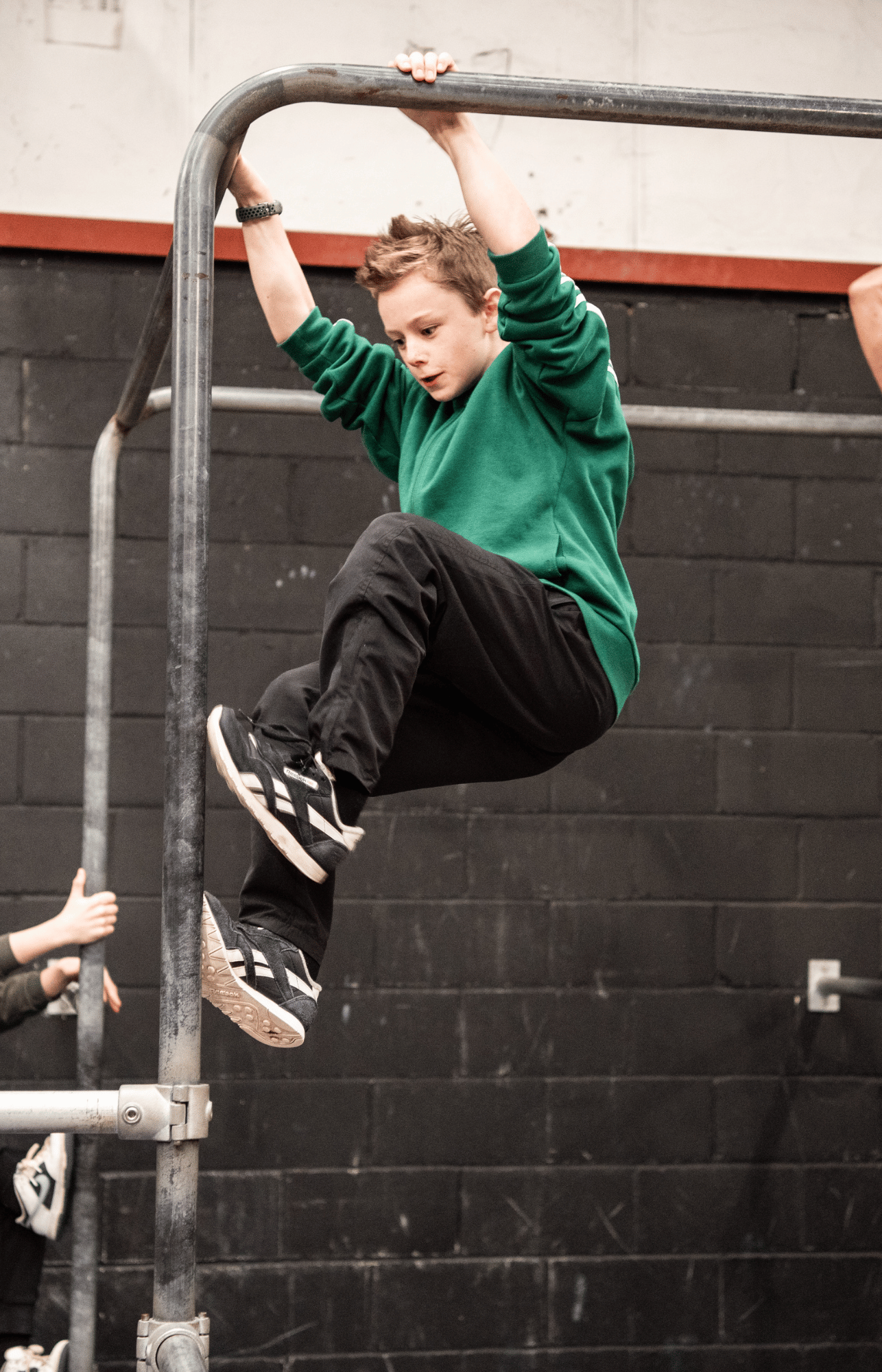
A student managing their own risk at Traversal
What Is “Risky Play” And Why Does It Matter?
There’s actually a term researchers use: “risky play.”
It sounds dramatic, but it simply means activities that involve uncertainty and challenge. Climbing. Jumping. Balancing at height. Moving quickly. Testing limits. A large review published in the International Journal of Environmental Research and Public Health looked at the impact of risky outdoor play on children. The findings were interesting. Risky play was linked to higher physical activity levels, better social health, and greater resilience without evidence of increased serious injury when environments were properly managed (Brussoni et al., 2015: https://www.mdpi.com/1660-4601/12/6/6423 ).
That last part is important.
It’s not about chaos or recklessness. It’s about structured, supervised challenge. That’s exactly what we aim to create in parkour. Physical Challenge and Mental Strength Are Connected Another study published in Child Indicators Research found that children who engaged in adventurous play reported higher levels of wellbeing and were more physically active overall (ttps://link.springer.com/article/10.1007/s12187-021-09804-5 ).
When kids push themselves physically and succeed, something shifts. You can see it in their body language. They trust themselves more. That trust carries into school, friendships and other areas of life.
Learning to Handle Fear
One of the biggest things I notice in the gym is how kids learn to manage fear. Not eliminate it. Manage it.
A recent study looking at a parkour-based resilience programme found that children developed stronger emotional regulation and self-belief through guided exposure to challenge (Journal of Community Psychology, 2024: https://pubmed.ncbi.nlm.nih.gov/40022741/). That’s exactly what I see here. The first time a child approaches a higher jump, their body is tense. The second time, they breathe differently. The third time, they coach themselves through it. That process matters far more than the jump itself.
Risk Doesn’t Mean Removing Safety
There’s a big difference between unmanaged danger and intelligent challenge. A review in Paediatrics and Child Health highlights how over-restricting risk can actually limit children’s opportunities to develop physical literacy and decision-making skills (https://academic.oup.com/pch/article/29/4/255/7717895).
Children need opportunities to assess situations for themselves. To think, “Can I do this?” and then decide. In a well-run environment, they’re not being pushed beyond their limits. They’re being supported to discover where those limits currently are. And then expand them.
What This Really Means
When your child attempts something difficult in the gym, they are practising:
• Managing nerves
• Making decisions
• Coping with failure
• Trying again after setbacks
• Trusting their own judgement
Those skills matter far beyond parkour. Resilience isn’t built in comfort. It’s built in those small, repeated moments of challenge where a child realises, “I can do hard things.” And that’s why we don’t remove every obstacle. We teach them how to overcome them.
If this resonates with you and you’d like to see how we apply these principles in our classes, you’re welcome to come and watch a session or ask us any questions.